
Back to Case Studies
Howard Hanna Happenings Newsletter Redesign
When I took over the company-wide newsletter, it had a nickname: the "snooze-letter."
Within 4 months, I turned it into something people actually wanted to read by evolving content and design based on analytics of how readers behaved.
4 Months
Transformation Timeline
4.56% → 14.7%
Click-Through Rate (CTR)
36.3%
Average Open Rate
39.9%
Peak Open Rate
24%
Top Issue Click-Through Rate (CTR)
Awarded
MarCom Honorable Mentioned
Overview
The Howard Hanna Happenings newsletter was distributed to a growing audience of more than 6,000 agents and employees in 2015 and more than 10,000 in 2017, but engagement did not reflect its audience size. Open rates were acceptable, but click-through was at 4.56%, and the content was not seen as valuable by the target audience.
I approached it as both an editorial and behavioral problem.
I rewrote and restructured the content to better reflect what agents actually cared about, shifted the design toward clearer visual hierarchy, and made interaction more obvious by treating links as intentional, visual entry points instead of passive text.
At the same time, I tracked performance issue-by-issue, using click and open data from Constant Contact to guide each iteration rather than relying on assumptions.
I also tracked how readers behaved with recurring content types to distinguish novelty-driven engagement from repeatable audience interests and evolved the newsletter continuously based on how people actually engaged with it. Within 4 months, the newsletter's click-through rate more than doubled.
The shift became visible in how people talked about it. The newsletter stopped being ignored and started being referenced internally as one of the first places major announcements needed to appear.
Evidence & Deliverables
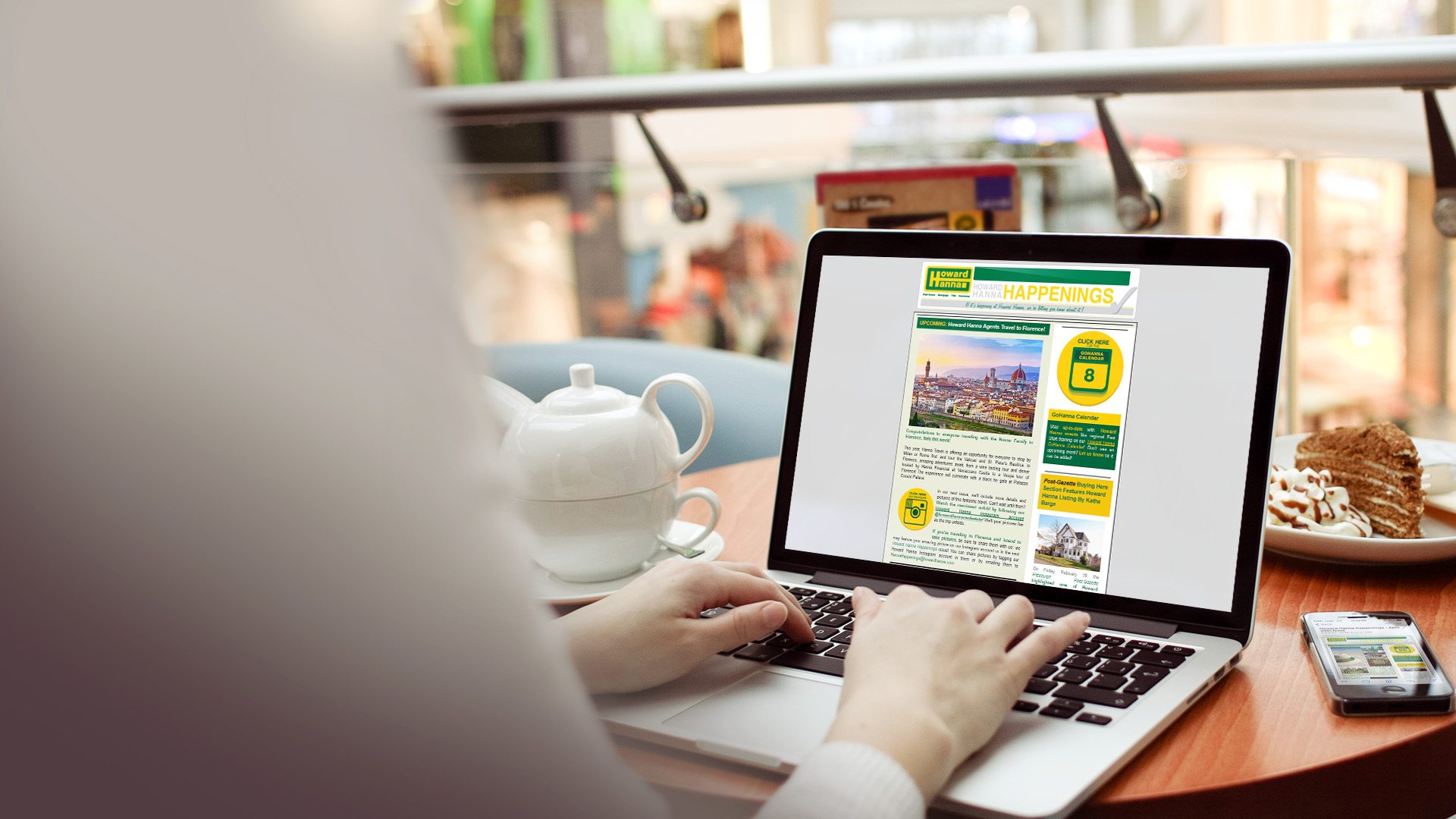
The following are pictures of the newsletter and metrics over time. Click any image for a larger view of it.
Newsletter Open and Click-Through Rates, 2014-2017
HannaCon15 Recap Newsletter
Strategic Decisions
- 01
Treated the newsletter as a behavior system, not just a communication channel
Researched industry newsletters, tested engagement tactics, and optimized around reader action instead of announcement volume. Analytics consistently showed readers were most likely to engage with highly visual and immediately useful content, particularly videos, photo albums, and agent-focused resources.
- 02
Designed interaction to be visually obvious
Implemented large, graphic-based links after testing showed they significantly improved engagement behavior. A newsletter with de-emphasized links achieved only a 6% click-through rate, while one using large visual links reached 17%.
- 03
Balanced click-through optimization against overall newsletter engagement
Tested shortened article previews with "Read More" calls-to-action to identify which topics readers cared about most. While the approach increased clicks, it also pushed readers off the newsletter early, reducing engagement with other high-value content. I adjusted layout, article order, and information density to balance immediate clicks against total newsletter interaction.
- 04
Used longitudinal tracking to identify repeatable engagement patterns
Maintained detailed records of each issue's performance, content placement, design changes, and click behavior over time. This made it possible to separate novelty-driven engagement from repeatable audience interests and refine the newsletter based on observed reader behavior rather than assumptions.
Key Results

4.56% → 14.7%
Average CTR
More than doubled click-through rate through content, hierarchy, and interaction redesign.
24%
Top Issue CTR
A top-performing issue showed the ceiling for what stronger interaction and content relevance could achieve.
6% → 17%
Link Emphasis Test
Large, visual links dramatically outperformed de-emphasized links during behavior testing.
4 Months
Transformation Timeline
The newsletter was repositioned quickly through iterative testing rather than a one-time redesign.

36.3%
Average Open Rate
Open performance strengthened alongside the more visible increase in downstream interaction.

Awarded
MarCom Honorable Mention
The redesign effort earned external recognition in addition to stronger internal engagement.
- Increased average open rate to 36.3% in 2016 with an all-time high of 39.9%
- Confirmed a key interaction-design insight: 6% CTR when links were de-emphasized versus 17% CTR when large, visual links returned
- Turned a low-value internal communication into a channel employees and agents actually referenced and used
- Increased average click-through rate from 4.56% to 14.7%
- Achieved a 24% click-through rate on a top-performing issue
- Earned a MarCom Honorable Mention Award